
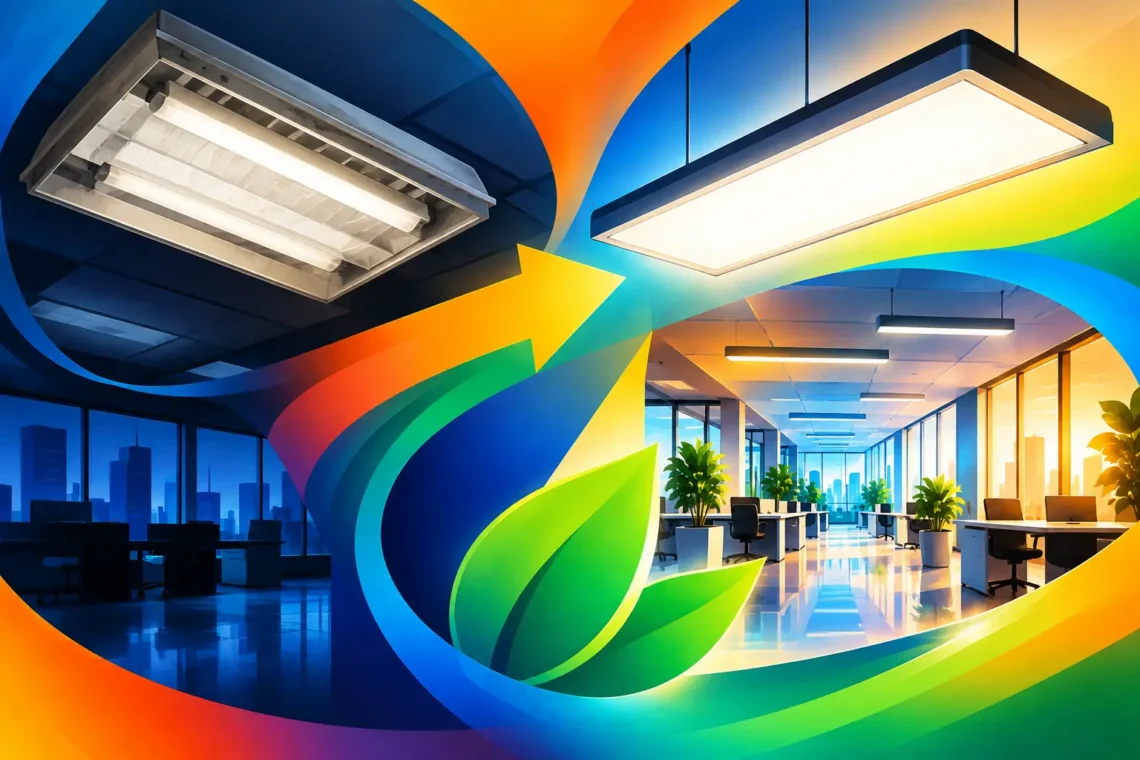
A flickering troffer over a checkout counter, a dark loading area, or lights that stay on long after closing can cost a business more than it seems. Poor lighting affects safety, productivity, customer experience, and monthly operating costs. This commercial lighting retrofit guide explains how New Orleans business owners and property managers can replace outdated lighting with a system that performs better and supports the way their space actually operates.
A retrofit is more than swapping old bulbs for LED lamps. The right project considers fixture condition, electrical capacity, light levels, controls, emergency lighting, and local code requirements before installation begins. Planning those details early helps prevent change orders, uneven results, and unnecessary downtime.
Start With a Lighting Assessment
Every successful retrofit begins with a walkthrough of the building. A qualified electrician should identify the existing fixture types, lamp wattages, operating hours, controls, circuit layout, and visible electrical concerns. Older commercial spaces may have a mix of fluorescent troffers, metal halide high bays, wall packs, recessed cans, exit signs, and exterior floodlights. Each area has different lighting needs.
The assessment should also focus on how people use the space. An office needs comfortable, even illumination that limits glare on screens. A warehouse needs reliable light at shelving, loading doors, and travel paths. A restaurant may need warmer light and flexible dimming, while a parking lot needs strong visibility without excessive light spilling onto neighboring properties.
Do not choose fixtures by wattage alone. Light output is measured in lumens, while wattage describes power use. Two LED fixtures with the same wattage can produce different light levels, color quality, beam patterns, and expected service life. Looking at the full fixture specification helps ensure the finished space is bright where it needs to be without becoming harsh or overlit.
Set the Right Goals for Your Commercial Lighting Retrofit
Cost savings are usually a major reason to upgrade, but they should not be the only goal. A lighting retrofit can also reduce maintenance calls, improve security, support employee comfort, and update the appearance of a commercial property. The priorities should be clear before fixtures are selected.
For many projects, the best results come from balancing four goals:
- Lower energy consumption and demand on the electrical system
- Better visibility for employees, customers, and visitors
- Reduced maintenance from failed lamps, ballasts, and aging fixtures
- Controls that prevent lights from running when areas are vacant or daylight is available
Those goals can conflict. The lowest-cost fixture may not provide the color rendering needed for a retail display. The brightest parking lot fixture may create glare for drivers or neighboring buildings. A more advanced control system can deliver better savings, but it may not be worthwhile in a small space with limited operating hours. The right approach depends on the facility, not a one-size-fits-all product choice.
Choose Color Temperature and Color Rendering Carefully
Color temperature changes how a space feels. It is measured in Kelvin. Warm white lighting around 2700K to 3000K often works well in hospitality, dining, and customer-facing spaces where a more comfortable appearance matters. Neutral white, commonly 3500K to 4000K, is a practical choice for offices, medical settings, and general commercial interiors. Cooler light around 5000K can work well in warehouses, exterior areas, and task-focused environments where crisp visibility is the priority.
Color rendering index, or CRI, is equally important in spaces where color accuracy matters. Retail displays, salons, food service, and design-oriented businesses often benefit from higher-CRI lighting. A fixture that saves power but makes merchandise, finishes, or food look dull can work against the business.
Check the Electrical System Before Ordering Fixtures
LED lighting generally uses far less energy than fluorescent, HID, or incandescent systems. However, lower lighting wattage does not eliminate the need for a professional electrical review. Older buildings may have aging branch circuits, damaged wiring, overloaded panels, outdated breakers, or fixtures with wiring that is no longer safe to reuse.
An electrician should verify that circuits are properly sized, grounding is in place, and the panel can support any added controls, emergency equipment, exterior lighting, or future expansion. This is especially important when a lighting project is part of a larger renovation that includes new equipment, security cameras, signage, AV systems, or additional outlets.
Retrofit work also requires attention to code compliance. Exit signs, emergency lights, and battery backup systems have specific performance requirements. Exterior fixtures may need wet-location ratings, impact protection, photocells, or occupancy controls. In areas exposed to moisture, dust, or high temperatures, the fixture rating matters as much as the light output.
Decide Between Retrofit Kits and New Fixtures
There are two common paths for commercial upgrades: modifying an existing fixture with an LED retrofit kit or replacing the fixture entirely. Both can be good solutions when selected for the right conditions.
Retrofit kits can make sense when an existing fixture housing is in good condition, fits the space well, and can be safely updated. They may reduce material costs and preserve the appearance of recessed or architectural fixtures. However, the existing housing, lens, sockets, and wiring still need to be inspected. A shortcut installation can lead to poor heat management, unreliable performance, or future maintenance problems.
New fixtures are often the better choice when older housings are damaged, yellowed, corroded, or poorly suited to modern LED components. Full fixture replacement can also improve light distribution, reduce glare, simplify maintenance, and provide a cleaner finished appearance. In warehouses and exterior applications, purpose-built LED high bays and wall packs frequently perform better than trying to adapt a fixture designed around older lamp technology.
Use Controls to Capture More Savings
A fixture upgrade reduces energy use, but controls can significantly improve the return on investment. The right controls reduce wasted runtime without asking employees to remember switches or follow complicated procedures.
Occupancy sensors are useful in restrooms, storage rooms, conference rooms, closets, and other areas that are used intermittently. Daylight harvesting controls can dim or turn off lights near windows and skylights when natural light is available. Timers, photocells, and scheduling are especially valuable for exterior lighting, signage, and common areas. In some facilities, networked lighting controls provide monitoring and adjustment across multiple locations.
Controls should match the space. An occupancy sensor in a warehouse aisle must be positioned and programmed so lights do not shut off while someone is working quietly in a rack area. Exterior photocells should be tested so they respond correctly to seasonal changes and nearby light sources. Proper commissioning matters just as much as the equipment selection.
Plan Installation Around Business Operations
Lighting work does not have to interrupt normal operations, but it does need a clear installation plan. Before work begins, identify areas that can be completed after hours, sections that need temporary lighting, and any equipment or inventory that must be protected from dust or access restrictions.
For occupied commercial spaces, a phased installation is often the best option. A contractor can complete one office area, retail zone, warehouse section, or exterior elevation at a time. This keeps the building functional while giving the business a chance to review light levels and fixture appearance before the entire project is finished.
After installation, the work should include testing switches, sensors, dimmers, emergency fixtures, and exterior controls. Walk the space at different times of day if possible. What looks good under daylight may reveal glare, shadows, or control issues after dark. Addressing those details promptly protects the investment.
Look Beyond the Fixture Price
The lowest bid is not always the lowest project cost. Quality fixtures, proper installation, electrical corrections, controls, and warranty support all affect the long-term value of a retrofit. Ask for a scope that clearly identifies fixture quantities, model specifications, control types, electrical work, disposal of old materials, and expected installation schedule.
It is also smart to compare projected energy savings against current operating hours and utility rates. A building where lights run 12 to 16 hours a day will usually see a faster return than one with limited occupancy. Maintenance savings matter too. Fewer lamp and ballast replacements can reduce service interruptions, lift rentals, and labor costs in high-ceiling spaces.
A well-planned retrofit should leave your business with safer electrical infrastructure, better visibility, and lighting that supports daily operations instead of creating another maintenance problem. For commercial properties in Greater New Orleans, Wiring Resource can assess existing lighting, identify practical upgrade options, and complete the electrical work with clear communication from the first walkthrough through final testing.