
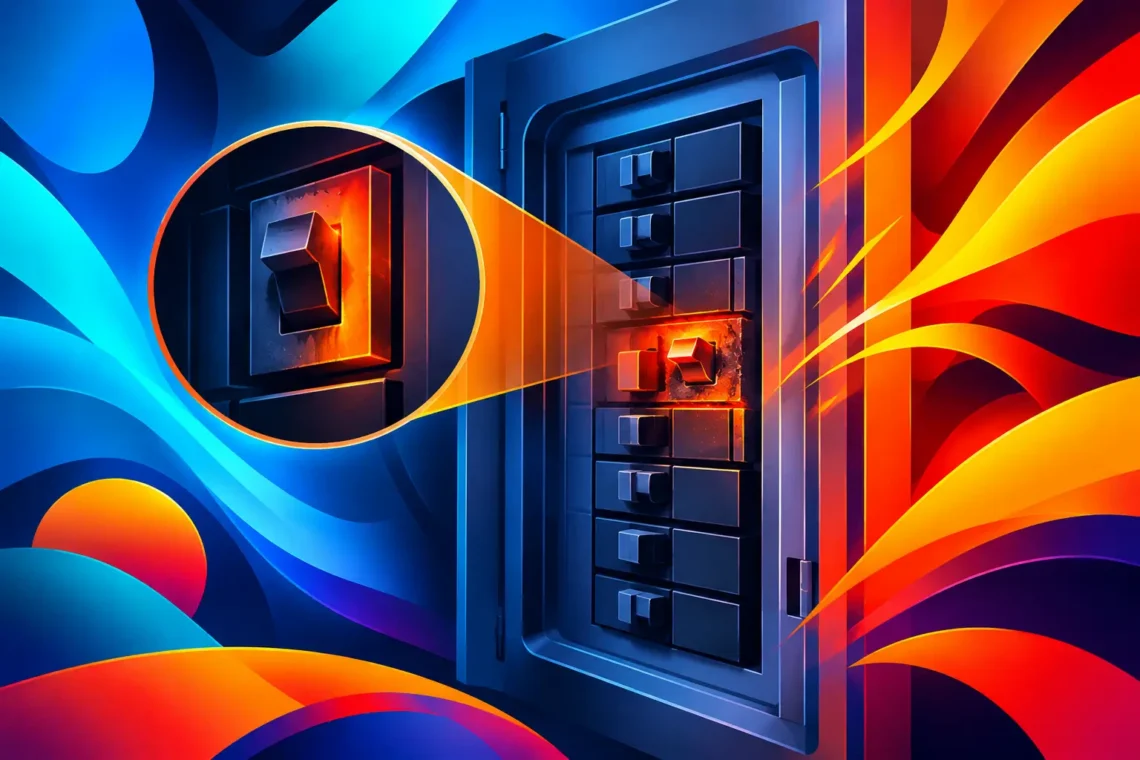
A breaker that trips once after a space heater, microwave, and toaster run at the same time may be doing exactly what it is designed to do. A breaker that will not reset, feels hot, trips repeatedly, or gives off a burning smell is a different situation. Do breakers fail? Yes. Like other electrical components, circuit breakers can wear out or become damaged, and a failing breaker deserves prompt professional attention.
Your electrical panel is built to protect wiring and equipment from dangerous overcurrent conditions. When something is wrong, the goal is not simply to get the power back on. The goal is to identify why the breaker reacted and make sure the circuit can operate safely afterward.
Do Breakers Fail Over Time?
Circuit breakers are mechanical and electrical safety devices. Inside each breaker are components that sense excessive current and open the circuit when necessary. Heat, repeated use, corrosion, age, manufacturing defects, loose connections, and electrical faults can all affect how reliably those components operate.
That does not mean every tripped breaker has failed. In many homes and businesses, the breaker is responding correctly to an overloaded circuit, a short circuit, a ground fault, or a problem with a connected appliance. Replacing a working breaker without finding the underlying cause can leave the real hazard in place.
The distinction matters. A breaker that trips because too many devices are sharing one circuit may need a load adjustment or a new dedicated circuit. A breaker that fails to trip during an overload may allow wiring to overheat. Both situations call for an experienced electrician, but the repair is not necessarily the same.
Warning Signs a Circuit Breaker May Be Failing
A breaker should move firmly between its on and off positions and should reset only after the condition causing the trip has been corrected. If its behavior changes, do not ignore it.
Common signs include:
- The breaker trips frequently even when normal loads are in use.
- It will not reset, or it immediately flips back to the tripped position.
- The breaker, panel cover, or nearby wall feels unusually warm.
- You notice a burning odor, buzzing, crackling, discoloration, or melted plastic around the panel.
- Lights flicker, outlets lose power intermittently, or a circuit behaves inconsistently.
- The breaker handle feels loose, damaged, or does not clearly click into position.
Heat and burning smells require immediate action. Turn off power to the affected area if it can be done safely, avoid touching a hot panel or damaged wiring, and contact a qualified electrician. If you see smoke, sparks, or active fire, leave the area and call emergency services first.
Why Breakers Trip When the Breaker Is Not the Problem
Repeated tripping is frustrating, especially when it shuts down a kitchen outlet, office equipment, HVAC accessory, or security system. Still, the breaker may be the part of the system working correctly.
An overloaded circuit is one of the most common causes. Older homes often have fewer circuits than modern households need. Portable heaters, window air conditioners, hair tools, countertop appliances, and entertainment equipment can quickly exceed a circuit’s capacity. In commercial spaces, added workstations, printers, refrigeration equipment, or AV equipment can create the same issue.
A short circuit is more serious. It occurs when a hot conductor contacts a neutral wire or another unintended path. Damaged appliance cords, loose connections, worn insulation, moisture, and pest damage can all contribute. Ground faults occur when electricity takes an unintended path to ground and are especially concerning in kitchens, bathrooms, garages, exterior locations, and other damp areas.
Sometimes the issue is not inside the building at all. Storm damage, water intrusion, corrosion, or problems at exterior equipment can affect electrical performance. Greater New Orleans properties face high humidity, heavy rain, and storm exposure, all of which make routine electrical inspections and properly protected equipment worthwhile.
What to Do When a Breaker Trips
Start by turning off or unplugging the devices on the affected circuit. Then move the breaker fully to the off position before resetting it to on. A breaker that appears to be on but has tripped may be sitting between positions, so pushing it fully off first matters.
If it stays on after you reduce the load, add devices back gradually. That can help identify an appliance or group of devices that is overloading the circuit. Do not keep resetting a breaker that trips immediately, trips under a small load, or shows any sign of heat or damage.
Avoid common shortcuts. Do not replace a breaker with a larger one to stop nuisance tripping. Do not force a breaker handle, remove the panel cover, or try to tighten connections inside a live panel. Increasing breaker size without confirming that the wiring is rated for it can create a fire risk. Panel work should be performed by a licensed electrical professional with the right testing equipment.
When a Panel Inspection Is the Right Next Step
An electrician can determine whether the breaker itself is defective or whether it is reacting to a problem elsewhere on the circuit. That inspection may include checking circuit load, breaker condition, panel connections, wire sizing, grounding, signs of moisture or corrosion, and the equipment connected to the circuit.
A panel inspection is especially valuable if your property has an older electrical panel, frequent breaker trips, recent renovations, added high-demand equipment, or a generator installation planned. Homes and businesses often outgrow their original electrical capacity over time. An electrician may recommend a new dedicated circuit, a panel repair, a panel upgrade, wiring repairs, or replacement of a damaged breaker based on what the system actually needs.
For property managers, a single recurring electrical complaint should not be treated as a minor inconvenience. A tenant reporting warm outlets, flickering lights, or repeated breaker trips may be alerting you to a developing issue. Timely diagnosis helps protect occupants, reduces downtime, and can prevent more extensive repairs later.
Older Panels and Breaker Reliability
Age alone does not prove that a breaker has failed, but older panels deserve more attention. Components can wear down, connections can loosen through years of heating and cooling cycles, and prior modifications may not meet current electrical needs. If a panel has corrosion, obsolete equipment, overcrowded wiring, missing labels, or visible damage, it should be evaluated.
Panel replacement is not automatically required every time a breaker trips. A targeted repair can be the right answer when the panel is otherwise in good condition. On the other hand, repeated problems across multiple circuits, limited capacity for new equipment, or a panel with known safety concerns may make an upgrade the more practical long-term choice.
Wiring Resource helps homeowners, property managers, and commercial clients evaluate breaker and panel concerns with clear recommendations based on safety, capacity, and the condition of the system. Whether the solution is a circuit repair, panel upgrade, dedicated circuit, or replacement breaker, the work should address the cause instead of only restoring power temporarily.
A breaker that trips is sending a message. Treat it as a reason to investigate, not a switch to keep resetting, and you can protect your property before a small electrical problem becomes a larger one.