
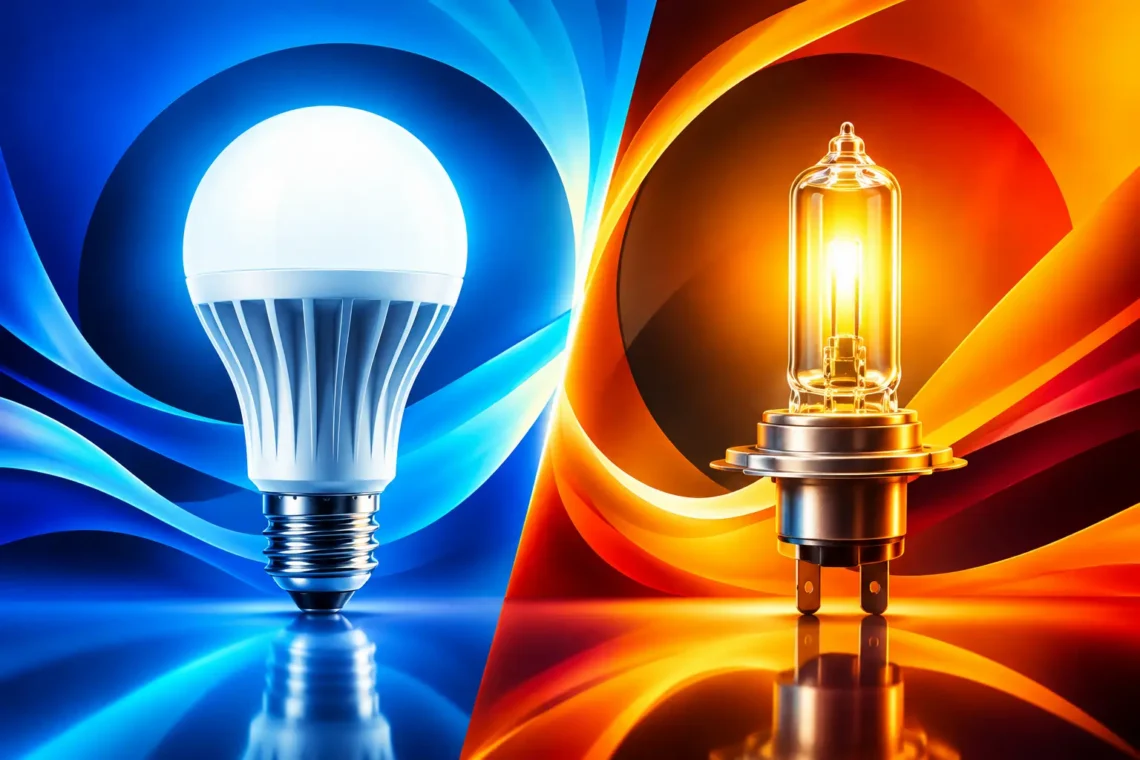
A halogen bulb can make a kitchen, office, or outdoor entry look bright and crisp, but it does so by running extremely hot and using far more power than a modern LED. When comparing LED lighting vs halogen, the better choice is usually LED – especially for homeowners and businesses looking to reduce maintenance, manage energy costs, and improve safety. Still, the right replacement depends on the fixture, dimmer, transformer, and the type of light you need.
LED Lighting vs Halogen: The Main Difference
Halogen lamps are an improved version of traditional incandescent bulbs. They create light by heating a tungsten filament inside a small quartz capsule filled with halogen gas. That process produces a bright, warm light, but much of the electricity becomes heat rather than visible light.
LEDs, or light-emitting diodes, create light electronically. They use substantially less energy, run cooler, and can last many years longer than halogen bulbs. While the upfront price of an LED lamp may be higher, its lower operating cost and longer service life usually make it the more economical option over time.
For a residence or commercial property with multiple recessed lights, landscape fixtures, under-cabinet lights, or exterior floodlights, the difference adds up quickly. Replacing a single bulb may save a little. Updating dozens of fixtures can reduce both energy use and the number of service calls needed for frequent bulb changes.
Energy Use and Operating Cost
This is where LEDs have the clearest advantage. A typical 50-watt halogen bulb can often be replaced with an LED that uses around 5 to 8 watts while producing similar usable brightness. Exact wattage and light output vary by bulb design, beam angle, and application, but the efficiency gap remains significant.
Halogen lighting can make sense for a fixture used only occasionally. A decorative accent light that runs a few minutes each week will not have the same operating cost as recessed kitchen lights used for several hours a day. But for frequently used lighting, such as living areas, retail spaces, parking areas, security lighting, and offices, LED is typically the practical investment.
Lower wattage also matters when a circuit serves many lights. Reducing the total lighting load can help when planning a renovation or updating an older property, although it does not replace the need to address undersized wiring, overloaded circuits, or an outdated electrical panel.
Heat, Safety, and Fixture Conditions
Halogen bulbs become hot enough to cause burns and can create problems near insulation, curtains, paper products, or other combustible materials. They require proper clearance and a fixture rated for their heat output. This is particularly important in recessed lights, track heads, enclosed fixtures, and tight display areas.
LED lamps operate much cooler at the light source, though they still produce some heat that must be managed through a heat sink. A quality LED fixture is designed to move that heat away from the diode. Cheap or poorly matched LED retrofit bulbs may fail early in enclosed fixtures because heat builds up around the electronics.
For homeowners, cooler operation can be a meaningful safety improvement. For commercial spaces, it can also reduce unwanted heat in areas already working hard to stay comfortable during a New Orleans summer. LEDs will not eliminate air-conditioning costs, but they add less heat to the room than halogen lamps.
Life Span and Maintenance
A halogen bulb may last roughly 2,000 to 4,000 hours, depending on its quality and how it is used. An LED rated for 25,000 hours or more can last many times longer. Ratings are estimates, not guarantees, but LEDs generally provide a far longer replacement cycle.
That difference is valuable anywhere bulbs are difficult to reach. Think high ceilings, stairwells, exterior soffits, commercial entryways, landscape lighting, and recessed fixtures above a kitchen island. Fewer replacements mean less time on ladders, less disruption for tenants or customers, and fewer maintenance expenses.
The fixture itself still matters. A failing socket, loose connection, incompatible dimmer, poor ventilation, or voltage issue can shorten the life of any lamp. If multiple bulbs burn out quickly, flicker, or change brightness unexpectedly, replacing the bulbs alone may not solve the underlying electrical problem.
Light Quality: Color, Brightness, and Appearance
One reason halogen remained popular for years is its excellent color rendering. It creates a warm, natural-looking light that makes finishes, food, and skin tones look accurate. Halogen also dims smoothly, becoming warmer as it dims.
Modern LEDs have closed much of that gap. High-quality LED lamps can provide strong color rendering and are available in a wide range of color temperatures. For most homes, 2700K provides a warm, familiar appearance similar to incandescent light. A 3000K LED feels slightly cleaner while remaining warm enough for living spaces. For task areas, garages, offices, and some commercial settings, 3500K to 4000K can provide a brighter, more neutral white light.
Brightness should be chosen by lumens, not just watts. Watts measure energy use. Lumens measure the amount of light produced. If you are replacing a halogen bulb, compare the bulb’s lumen output, base type, beam angle, and dimming capability rather than assuming every LED replacement will look the same.
Dimmers, Transformers, and Retrofits
Not every LED bulb works properly in every existing halogen setup. This is especially true with low-voltage landscape lighting, under-cabinet systems, older recessed fixtures, and magnetic or electronic transformers.
An LED replacement may flicker, buzz, fail to dim smoothly, or remain faintly illuminated when switched off if the dimmer or transformer is not compatible. Some older dimmers need a minimum electrical load that LED bulbs do not meet. In other cases, the best solution is replacing the dimmer with an LED-rated model or updating the fixture and driver rather than forcing a retrofit bulb into aging equipment.
Before purchasing replacement lamps for a large project, check these details:
- The bulb base and physical size
- The required voltage, especially for 12-volt systems
- Whether the fixture is enclosed or rated for wet locations
- Dimmer and transformer compatibility
- The desired lumens, beam angle, and color temperature
For a single lamp, those checks are simple. For a whole home, retail space, or outdoor property, a professional assessment can prevent mismatched color, unreliable dimming, and avoidable replacement costs.
When Halogen May Still Make Sense
Halogen is not automatically wrong. It may be reasonable when you need a short-term replacement, have a specialized fixture that cannot yet be converted, or use a rarely operated lamp where energy savings will be minimal. Some specialty applications also require a specific halogen lamp for optical performance or equipment compatibility.
However, halogen is becoming less practical for everyday use. It costs more to operate, produces more heat, and requires more frequent replacement. Availability can also be limited as lighting standards and product lines continue to shift toward efficient alternatives.
For most indoor and outdoor upgrades, LED provides the better balance of performance, operating cost, and long-term reliability. The key is choosing products that fit the fixture and the purpose of the space instead of selecting a bulb based on price alone.
Plan the Upgrade Around the Whole System
A successful lighting upgrade is more than swapping lamps. Consider where light is needed, how long it stays on, how the controls work, and whether the fixtures are in good condition. Kitchens may benefit from warm, dimmable recessed lighting and focused task lighting. Exterior areas may need wet-rated LEDs with motion or photocell controls. Commercial properties may benefit from consistent color temperature and lighting levels that support security, safety, and daily operations.
If your lights flicker, trip breakers, run hot, or fail repeatedly, it is worth having the wiring, switches, dimmers, and fixtures evaluated before investing in replacements. Wiring Resource helps Greater New Orleans property owners install and upgrade lighting with attention to safety, appearance, and dependable performance.
The best lighting choice should make the space more useful every day while reducing the problems you have to think about later.